Sunday, May 27, 2012

D A R and S A R

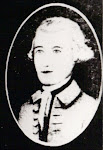
Being descended from Stephen Moore, our Revolutionary War Patriot, entitles you to membership in either the DAR (Daughters of the American Revolution) or the SAR (Sons of the American Revolution.)

Starting from scratch and going back six to eight generations may be daunting to some; however, if a more recent ancestor has been accepted into membership, you will have fewer generations to prove.  For example, my mother was a member of DAR, so it was relatively easy for me to prove my lineage back to Stephen Moore, only having to supply my birth certificate, proving the last generation.  Even finding a relative back in your lineage in one of the DAR or SAR rolls will save you time and documentation.

Terri O'Neill has shown that Robert Moore also had creditable service as a Revolutionary War Patriot, but if you get back that far, you may as well go for one more generation to Stephen.

Not all Moore family descendants can become members of the DAR and SAR -- only those who are descended from Stephen.  This is because only Stephen was a Revolutionary War Patriot having fought in the war for independence.  Most of Stephen's siblings remained loyal to the British Crown!

Here is copy of my Sons of the American Revolution Certificate:  I have been a member since 14 June 1979.


If you will add your DAR or SAR national certificate number in the comments below, I will add it into the following table.  This should make it easier in the future for our descendants to apply for membership.

DAR or SAR:  National Number:      Name:                                    Date:              .

SAR                 115865                      David Elmo Jeffreys, Jr.         14 June 1979
DAR                728184                     Terri Bradshaw O'Neill            2 February 1990
SAR                                                    Mike Andrus                               2012
DAR                911467                      Sarah Brodeur Johnson          October 2012
DAR             926546                     Sandra Moore Shoffner          11 December 2013

Monday, April 9, 2012

Cousins Explained

Cousins Explained
 
What Is a First Cousin, Twice Removed?
If someone walked up to you and said, "Howdy, I'm your third cousin, twice removed," would you have any idea what they meant? Most people have a good understanding of basic relationship words such as "mother," "father," "aunt," "uncle," "brother," and "sister." But what about the relationship terms that we don't use in everyday speech? Terms like "second cousin" and "first cousin, once removed"? We don't tend to speak about our relationships in such exact terms ("cousin" seems good enough when you are introducing one person to another), so most of us aren't familiar with what these words mean.
Relationship Terms
Sometimes, especially when working on your family history, it's handy to know how to describe your family relationships more exactly. The definitions below should help you out.
Cousin (a.k.a "first cousin")
Your first cousins are the people in your family who have two of the same grandparents as you. In other words, they are the children of your aunts and uncles.
Second Cousin
Your second cousins are the people in your family who have the same great-grandparents as you., but not the same grandparents.
Third, Fourth, and Fifth Cousins
Your third cousins have the same great great grandparents, fourth cousins have the same great-great-great-grandparents, and so on.
Removed
When the word "removed" is used to describe a relationship, it indicates that the two people are from different generations. You and your first cousins are in the same generation (two generations younger than your grandparents), so the word "removed" is not used to describe your relationship.
The words "once removed" mean that there is a difference of one generation. For example, your mother's first cousin is your first cousin, once removed. This is because your mother's first cousin is one generation younger than your grandparents and you are two generations younger than your grandparents. This one-generation difference equals "once removed."
Twice removed means that there is a two-generation difference. You are two generations younger than a first cousin of your grandmother, so you and your grandmother's first cousin are first cousins, twice removed.

Relationship Charts Simplify Everything
Now that you have an idea of what these different words mean, take a look at the chart below. It's called a relationship chart, and it can help you figure out how different people in your family are related. It's much simpler than it looks, just follow the instructions.
Instructions:
This chart attempts to explain the relationships that exist between cousins. It may be extended in either direction for as many generations as is necessary. The parents represent the common ancestors you have with your relative. Count across the top row until you reach your generation. Now count down this column until you reach your relative's generation.
parents
child
g-child
gg-child
ggg-child
gggg-child
child
brother/
sister
nephew/
niece
g-nephew/
g-niece
gg-nephew/
gg-niece
ggg-nephew/
ggg-niece
g-child
uncle/
aunt
first cousin
first cousin
once removed
first cousin
twice removed
first cousin
thrice removed
gg-child
g-uncle/
g-aunt
first cousin
once removed
second cousin
second cousin
once removed
Second cousin
twice removed
ggg-child
gg-uncle/
gg-aunt
first cousin
twice removed
second cousin
once removed
third cousin
third cousin
once removed
gggg-child
ggg-uncle/
ggg-aunt
first cousin
thrice removed
second cousin
twice removed
third cousin
once removed
fourth cousin
  This gives you your relationship to your relative. If you have only one common ancestor with your relative (perhaps this ancestor had multiple marriages), then the same chart applies but the relationships are half blood instead of full blood.  In general, the person in the first row is the ***** of the person in the first column. ***** stands for the appropriate table entry, eg. sister, uncle, second cousin, etc.
  Example: Suppose I want to find out my relationship to the son of my grandmother's brother. Then the common ancestors that we share are my great-grandparents, which are his grandparents. (I am assuming a full blood relationship). Therefore, reading from the chart we find that
parents
child
g-child
ME!
child
brother/
sister
nephew/
niece
g-nephew/
g-niece
RELATIVE!
uncle/
aunt
first cousin
first cousin
once removed
I am the first cousin once removed of this relative!

Another Chart for Figuring Relationships
On the top row, find the relationship of one person to the common ancestor and follow the column straight down. Find the other person's relationship to the common ancestor on the left-hand column and follow that row straight across. The relationship is where the projected row and column meet.
Common Ancestor
Child
Grandchild
Great Grandchild
Great Great Grandchild
Great Great Great Grandchild
GGGG Grandchild
GGGGG Grandchild
GGGGGG Grandchild
Child
Sibling
Niece or Nephew
Grand Niece or Nephew
Great Grand Niece or Nephew
Great Great Grand Niece or Nephew
GGG Grand Niece or Nephew
GGGG Grand Niece or Nephew
GGGGG Grand Niece or Nephew
Grandchild
Niece or Nephew
First Cousin
First Cousin Once Removed
First Cousin Twice Removed
First Cousin Three Times Removed
First Cousin Four Times Removed
First Cousin Five Times Removed
First Cousin Six Times Removed
Great Grandchild
Grand Niece or Nephew
First Cousin Once Removed
Second Cousin
Second Cousin Once Removed
Second Cousin Twice Removed
Second Cousin Three Times Removed
Second Cousin Four Times Removed
Second Cousin Five Times Removed
Great Great Grandchild
Great Grand Niece or Nephew
First Cousin Twice Removed
Second Cousin Once Removed
Third Cousin
Third Cousin Once Removed
Third Cousin Twice Removed
Third Cousin Three Times Removed
Third Cousin FourTimes Removed
GGG Grandchild
Great Great Grand Niece or Nephew
First Cousin Three Times Removed
Second Cousin Twice Removed
Third Cousin Once Removed
Fourth Cousin
Fourth Cousin Once Removed
Fourth Cousin Twice Removed
Fourth Cousin Three Times Removed
GGGG Grandchild
GGG Grand Niece or Nephew
First Cousin Four Times Removed
Second Cousin Three Times Removed
Third Cousin Twice Removed
Fourth Cousin Once Removed
Fifth Cousin
Fifth Cousin Once Removed
Fifth Cousin Twice removed
GGGGG Grandchild
GGGG Grand Niece or Nephew
First Cousin Five Times Removed
Second Cousin Four Times Removed
Third Cousin Three Times Removed
Fourth Cousin Twice Removed
Fifth Cousin Once Removed
Sixth Cousin
Sixth Cousin Once Removed
GGGGGG Grandchild
GGGGG Grand Niece or Nephew
First Cousin Six Times Removed
Second Cousin Five Times Removed
Third Cousin Four Times Removed
Fourth Cousin Three Times Removed
Fifth Cousin Twice Removed
Sixth Cousin Once Removed
Seventh Cousin
(Based on the system used by courts and most genealogical societies.)

Thursday, January 19, 2012

Victor Bailey Moore Family Photographs

The collection of photographs that Sid brought to the reunion had belonged, for the most part, to his father Victor Bailey Moore. Some of them have a note (in quotes) on the back identifying the person by name or by relationship. Here are the photos and an explanation of who they were.

“Uncle Tom Allen”
This is Victor Bailey Moore’s uncle Thomas Ellis Allen, Sr. (1868-1959). His first wife was Hallie Moore (1871-1911), daughter of George Galliton Moore.  After her death, he married her sister Elizabeth (1880-1972).
~~~~~~~~~~~~~~~
George Venable Allen (internet photo)

The son of Thomas Venable Allen and Hallie Moore.


~~~~~~~~~~~~~~~

“Mrs. Lula Reade Bowen”

Lula Reade Bowen (1870-1949). The daughter of William Franklin Reade and Martha E. Moore. Victor’s 1st cousin twice removed. She was the daughter of Alonza Reade Moore and granddaughter of Stephen Moore’s son Sidney.
~~~~~~~~~~~~~~~
“Susie Fuller”

The back reads “A Merry Christmas to Nellie. Susie Fuller, 1901”. Susie was Susan Webb (Jan. 1869 - ?), the daughter of Alexander Smith Webb Jr. (1840-1928) and Mary Annabella Moore (1841-1930). She was Cornelia L. Moore’s cousin and the widow of James Nicholson Fuller (? 1843 – 1897 ?).


~~~~~~~~~~~~~~~

“Cousin Anna Goodson”

Anna Street Walker Goodson (1864-1906). Daughter of Alexander Walker and Harriet Rebecca Bailey. A 1st cousin once removed of Helen Train Richardson, Charles A. Moore’s 2nd wife.
~~~~~~~~~~~~~~~
“Robert W. Lawson his wife Mary Craddock Lawson”
Robert W. Lawson (1853-1914) son of David Lawson and Jane Bailey, brother of Helen Train Richardson’s mother Catherine Harris Lewis Lawson. Mary E. Craddock Johnston (1878-?).
~~~~~~~~~~~~~~~
Victor Bailey Moore (1897-1955). I think that all of these are Victor.


~~~~~~~~~~~~~~~
“Grandma George G. Moore”

Betty A. Bailey (1838-1917). Wife of George Gallatin Moore (1836-1916). Mother of Cornelia L. Moore.
~~~~~~~~~~~~~~~
Charles Aurelius Moore (1868-1930)

~~~~~~~~~~~~~~~

Cornelia L. Moore (1868-1904)
Charles Aurelius Moore’s first wife.
~~~~~~~~~~~~~~~
Frank Richardson Moore (1912-1988)

~~~~~~~~~~~~~~~

“George G. Moore”

George Gallatin Moore (1836-1916). Husband of Betty A. Bailey, father of Cornelia L. Moore. Capt., 11th Brigade, 44th Regt., Bushy Fork, Mt. Tirzah CSA.
~~~~~~~~~~~~~~~
“Grandpa Sam Moore, Aunt Ella, Uncle Rob, Uncle Will, Uncle Sam”

Samuel Sidney Moore (1839-1912), Charles Aurelius Moore’s father. His children (L-R): William Algernon Moore (1882-1928); Robert Payne Moore (1880-1972); Mary Ella Moore (1876-1906); Samuel Sidney Moore (1884-1899). Samuel was a Sgt., Co. A, 24th NC Infantry Regt. He was wounded at the battle of Malvern Hill (Richmond) July 1, 1862 and was discharged April 27, 1863.

~~~~~~~~~~~~~~~

“Jennie Daily Moore”

Virginia Viola Dailey Moore (1880-?). Wife of Junius Portius Moore, sister-in-law of Cornelia L. Moore.
~~~~~~~~~~~~~~~
“Uncle Junius, J.P. Moore”

Junius Portius Moore (1874-1946). Cornelia L. Moore’s brother, husband of Virginia Viola Dailey.

~~~~~~~~~~~~~~~

“Dailey's father”

The only person who seems to fit is Junius Portius Moore (1874-1946), the husband of Virginia Dailey and the father of Lawrence Dailey Moore, 10 Jan 1902 – 23 Aug 1946.
~~~~~~~~~~~~~~~
“Rev. Junius P. Moore”

Rev. Junius Pulliam Moore (1815-1878). Charles Aurelius Moore’s grandfather. Father of Samuel Sidney Moore (1839-1912). Chaplain, Co. S, 21st NC Infantry Regt., CSA.

~~~~~~~~~~~~~~~

“W.B. Moore, Uncle Marvin”

Marvin Bailey Moore (1878-1945). Cornelia L. Moore’s brother.
~~~~~~~~~~~~~~~
“Robert Stanford Moore, age 15 months”

Robert Stanford Moore (1901-1970)

~~~~~~~~~~~~~~~
Moore, Robert, Victor, Bailey

Robert Stanford Moore (1901-1970), Victor Bailey Moore (1897-1955), Bailey Reade Moore (1903-1971)

~~~~~~~~~~~~~~~
Theo Moore


 Theophilus Horner Moore (1914-1977)
~~~~~~~~~~~~~~~

“Victor B. Moore, standing, Robt. S. Moore, seated”

~~~~~~~~~~~~~~~
“Bruce & Lille Noel, children of Ned Noel & Ella Moore Noel, grandchildren of S.S. Moore”

Bruce Noell (ca. 1901-?), Lillie Noell (ca. 1903-?), Children of Edwin Reade & Ella Moore Noell, Samuel Sidney Moore’s daughter.
~~~~~~~~~~~~~~~

“Ella Moore Noel”

Mary Ella Moore Noell (1876-1906). Charles Aurelius Moore’s sister.
~~~~~~~~~~~~~~~
“Rufus Powell III”

Rufus Heflin Powell III (1915-1994) son of Rufus Heflin Powell (1892-1974) and Elizabeth Bailey Reade (1893-1950). Elizabeth was the daughter of Joseph Gardner Reade and Mary B. Moore, Cornelia L. Moore’s sister.


~~~~~~~~~~~~~~~
“Aunt Mamie Reade”

Cornelia L. Moore’s sister Mary B. Reade.
~~~~~~~~~~~~~~~
“Compliments of Eugene W. Reade”

Eugene Walter Reade (1866-1950). Brother of Joseph Gardner Reade (1861-1950). Son of Washington Franklin Reade (1815-1905). Husband of Cornelia L. Moore’s sister Fannie Bailey Moore (1866-1927).
~~~~~~~~~~~~~~~

Fannie Moore Reade

Fannie Bailey Moore (1866-1927). Cornelia L. Moore’s sister. Wife of Eugene Walter Reade.
~~~~~~~~~~~~~~~
“Uncle Joe Reade”

Joseph Gardner Reade (1861-1950). Husband of Cornelia L. Moore’s sister Mary B. Moore.
~~~~~~~~~~~~~~~

“Sue Bettie Reade”

Sue Bettie Reade (1887-1972) daughter of Charles Aurelius Moore’s sister Cornelia Aurelius Moore (1866-1921) and Thomas Burton Reade (1856-1935).
~~~~~~~~~~~~~~~
“Wash Reade”

Washington Franklin Reade (1893-1970). Brother of Sue Bettie Reade, above.


~~~~~~~~~~~~~~~
“Bailey Richardson”

Benjamin Bailey Richardson (1883-?). Brother of Helen Train Richardson.
~~~~~~~~~~~~~~~
Helen Richardson

Helen Train Richardson (1874-1916). Charles Aurelius Moore’s second wife.


~~~~~~~~~~~~~~~
Maude Richardson


Maude Katherine Richardson (1891-1973). Helen Train Richardson’s sister.
~~~~~~~~~~~~~~~
William Richardson

William Edward Richardson (1848-1920). Helen Train Richardson’s father.


~~~~~~~~~~~~~~~
“Janie Richardson”

Willie Jane Richardson (1886-?). Helen Train Richardson’s sister.
~~~~~~~~~~~~~~~
“Lizzie Powell Speed”

Elizabeth Powell Speed (1880-1944). Daughter of Charles Aurelius Moore’s Aunt Ella (1854-1887)(Samuel Sidney Moore’s sister) and Benjamin Iredell Powell (1849-1900). The back reads “For Johnnie, taken on Mr. Webb’s front porch, L.M.P. Jan 26, 1903”
~~~~~~~~~~~~~~~
“Uncle Johnnie”

Victor Bailey Moore’s only uncle named Johnnie was Cornelia L. Moore’s brother John Galliton Moore (1876-1903).
~~~~~~~~~~~~~~~
“Uncle Lex & Aunt Harriet Walker”

Rev. Alexander Walker (1825-1904) & Harriet Rebecca Bailey (1823-1906), sister of Jane Bailey (Helen Train Richardson’s grandmother).


~~~~~~~~~~~~~~~
R.P. Moore


Probably Robert Payne Moore (1880-1972). Charles Aurelius Moore’s brother. The photo on the right is annotated “Robert P. Moore, Bailey brother”. While Robert did not have a brother named Bailey, the photographs are strikingly similar.
~~~~~~~~~~~~~~~

Francesca Lindenthal

There are several photos of the Moore boys with Frank Burns (Dewitt Frank Burns, a neighbor at 817 Ramseur) and Frances Lindenthal. Francesca Lindenthal is the daughter of famed Austrian-born bridge engineer Gustav Lindenthal and Carrie Herndon, sister of Charles Aurelius Moore’s third wife.

This last photo is of her and her first husband Hans Renz ca. 1936.


~~~~~~~~~~~~~~~~~~~~~~~~~~~~~~~~~~~

Photographs contributed by Steve Moore, Murfreesboro, TN from his personal collection.